

My favorite sound
The ocean
Services
Comprehensive Hearing Tests
Your Hearing Journey
Understand your hearing. Find your next step.
Are conversations harder to follow, especially in background noise? A hearing evaluation helps you understand your hearing and discuss what to do next. Testing may include hearing sensitivity, speech understanding, and speech-in-noise measures, depending on your needs and the services available.
You are welcome to bring a loved one and any existing hearing aids.
430 Million
People worldwide require rehabilitation for disabling hearing loss, according to the World Health Organization.[1]
1 in 8
People in the U.S. aged 12 or older have hearing loss in both ears, based on hearing examinations reported by NIDCD.[2]
Your Next Step
Discuss changes in your hearing with a hearing care professional.
Age-related hearing loss can develop gradually, so changes may be easy to miss. Difficulty following conversations, hearing warnings, or keeping up in background noise can be reasons to discuss an evaluation. Ask your provider which tests and follow-up schedule are appropriate for you.[3]
Hearing and Cognitive Health
Research has found an association between hearing loss and cognitive decline in older adults. This does not establish that hearing loss directly causes dementia or that hearing aids prevent it.[4]

Gradual Onset
Hearing changes can be gradual. Tell your provider about the listening situations that have become difficult, even if you are unsure whether your hearing has changed.

Informed Care Decisions
An evaluation helps guide a discussion of communication strategies, appropriate devices, and whether medical assessment is needed. Recommendations depend on your results and concerns.

Understanding Your Results
Your provider considers hearing sensitivity and speech results together to discuss appropriate next steps. Findings may also indicate a need for medical evaluation.
Sudden hearing loss is a medical emergency. Seek medical attention immediately rather than waiting for a routine hearing-test appointment.[5]
What to Expect
What a Comprehensive Hearing Test Includes
A clearer picture of how you hear.
A comprehensive hearing evaluation looks at more than the quietest sounds you can hear. The tests below assess hearing sensitivity and how you understand speech in quiet and background noise. Your hearing care professional reviews the results with you and discusses the next step. The tests used depend on your needs and the practice's available services.
Hearing Sensitivity
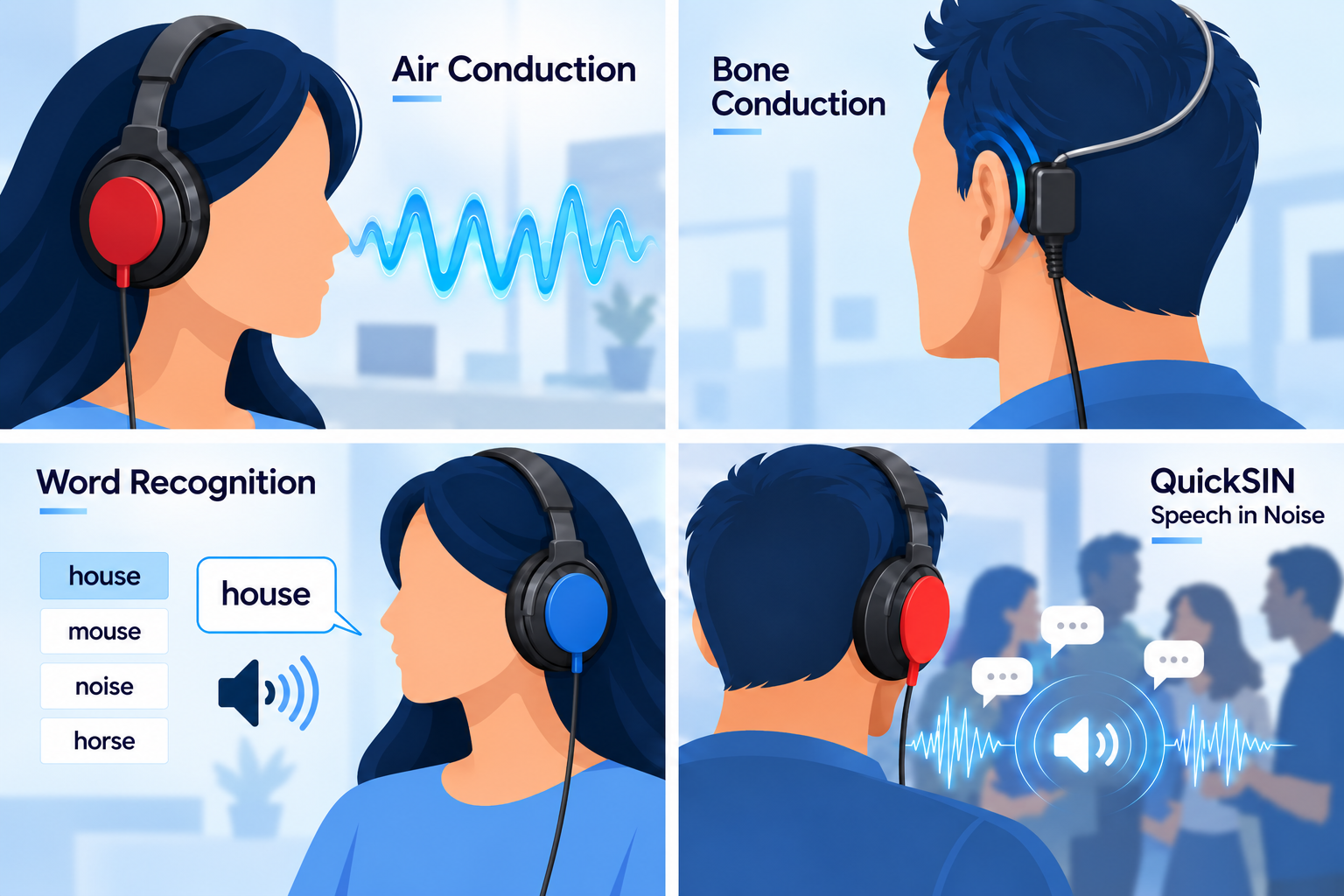
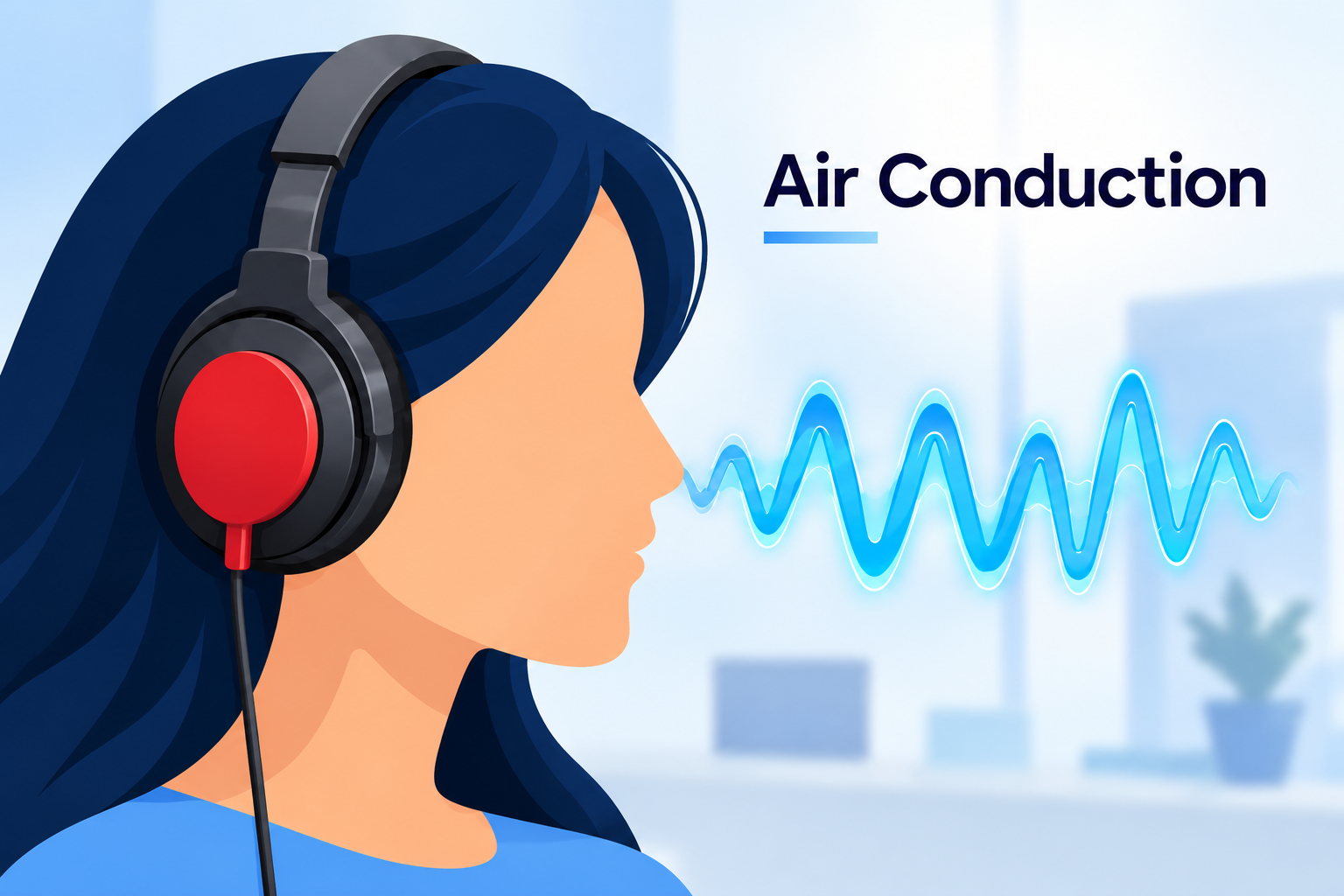
Air Conduction Testing
Discover the sounds you may be missing.
What happens: You wear headphones or insert earphones and listen for tones at different pitches and volumes. The sound travels through your ear canal, eardrum and middle ear to the inner ear, the same pathway used in everyday listening.
What we learn: The quietest sounds you can hear at each pitch are recorded on an audiogram. These results show your hearing sensitivity across the range of speech and environmental sounds and help guide your hearing care professional's recommendations.
Understanding the Results
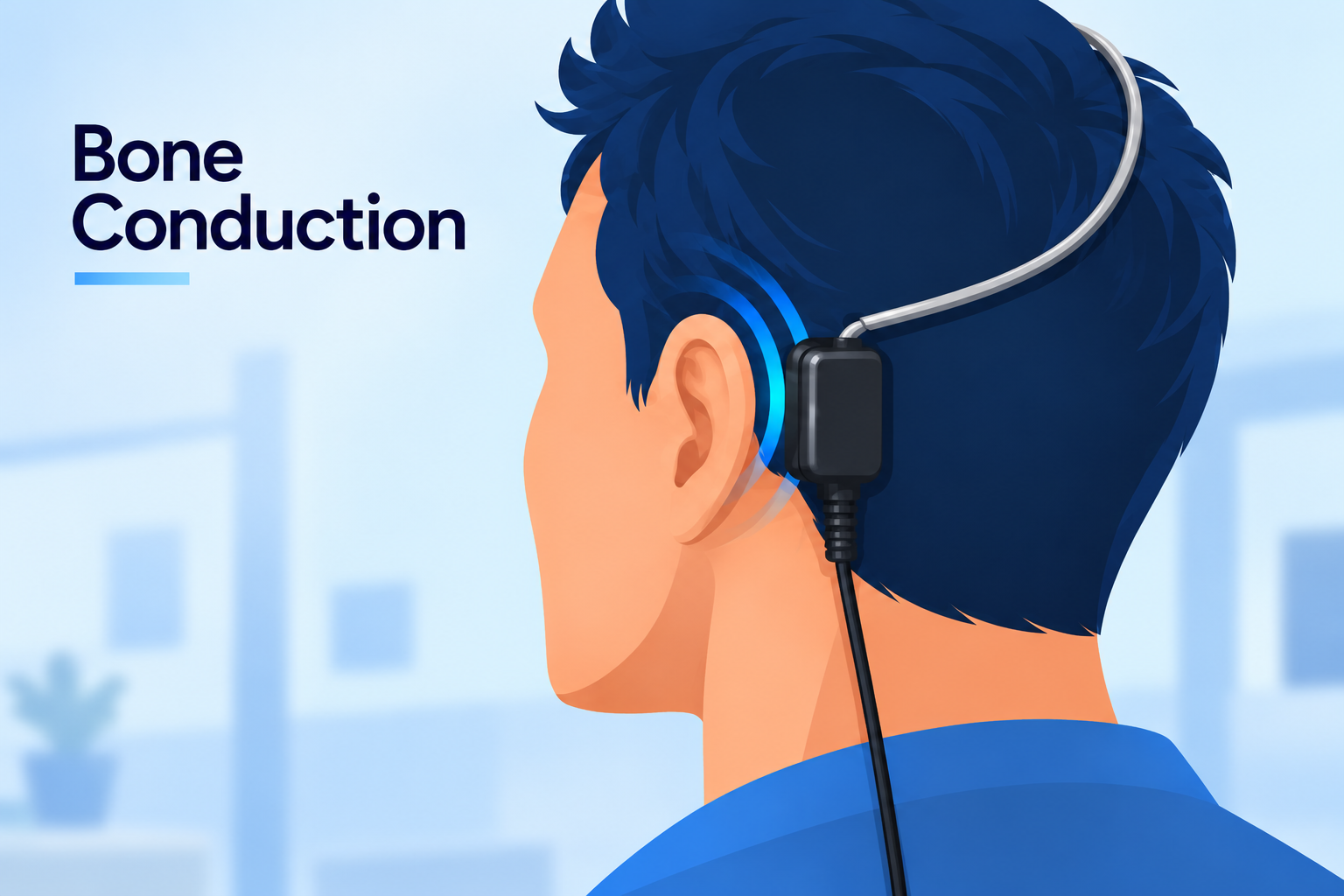
Bone Conduction Testing
Find out where hearing changes begin.
What happens: A small vibrating device rests behind your ear on the mastoid bone. It sends gentle vibrations directly to the inner ear, bypassing the ear canal and middle ear.
What we learn: Comparing these results with air conduction testing helps your hearing care professional understand whether hearing changes involve the outer or middle ear (conductive hearing loss), the inner ear or auditory nerve (sensorineural hearing loss), or a combination of both. The findings help guide recommendations, including whether a medical evaluation or hearing aid support may be appropriate.
Speech in Quiet
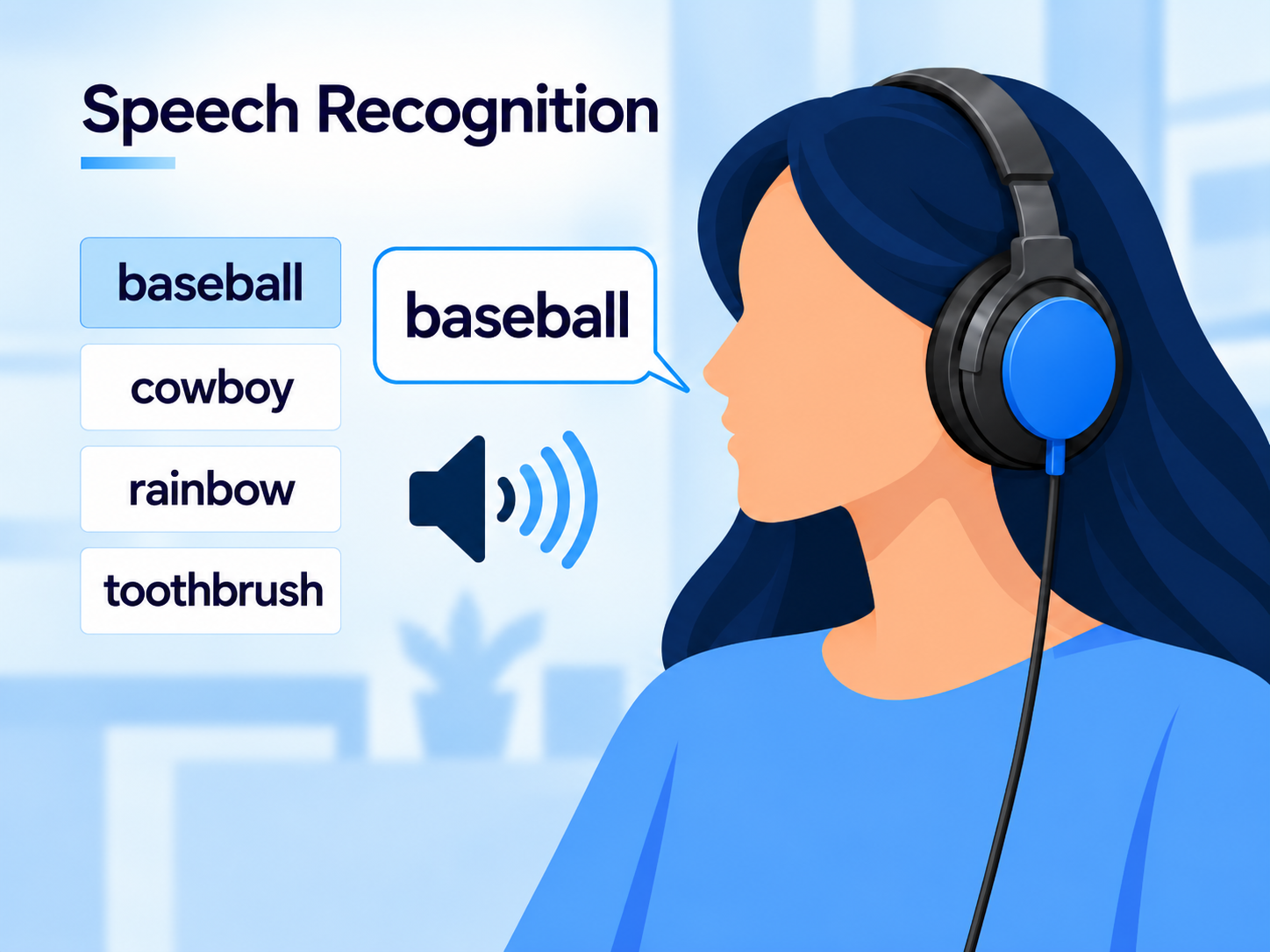
Speech Understanding Tests (Speech Reception Threshold)
Find the softest speech you can understand.
What happens: You listen to familiar two-syllable words at different volumes and repeat what you hear.
What we learn: The Speech Reception Threshold (SRT) is the softest level at which you correctly recognize about half the words. Your hearing care professional compares this result with your tone-testing results to check that the findings agree.[6]
Speech Clarity
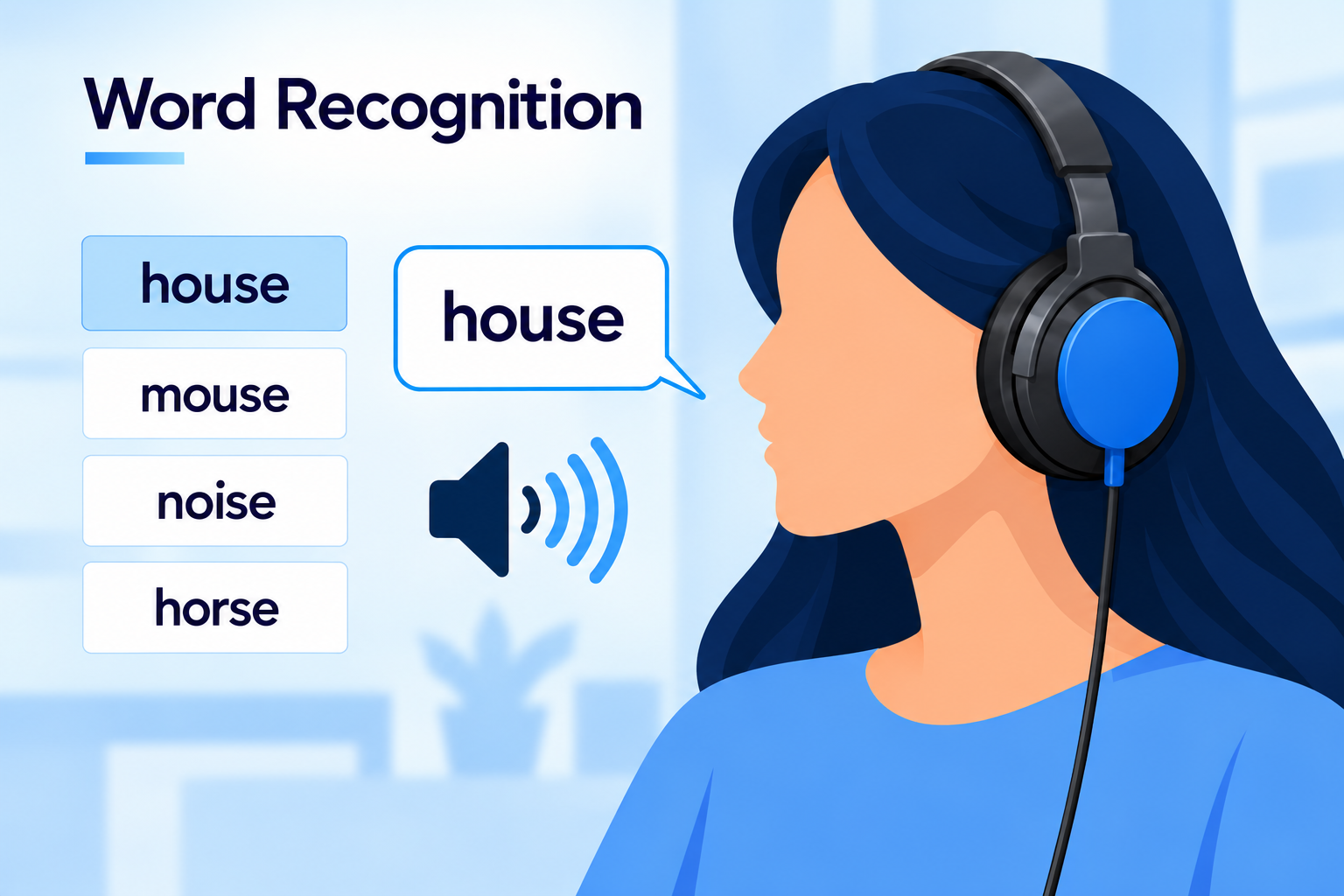
Word Recognition Testing
Understand how clearly you hear words.
What happens: You listen to a list of single-syllable words at an audible level and repeat each word you hear.
What we learn: The percentage of words you repeat correctly shows how clearly you recognize speech in quiet at the tested level. Your hearing care professional considers this score alongside your other results and listening concerns when discussing care options.[7]
Speech in Background Noise
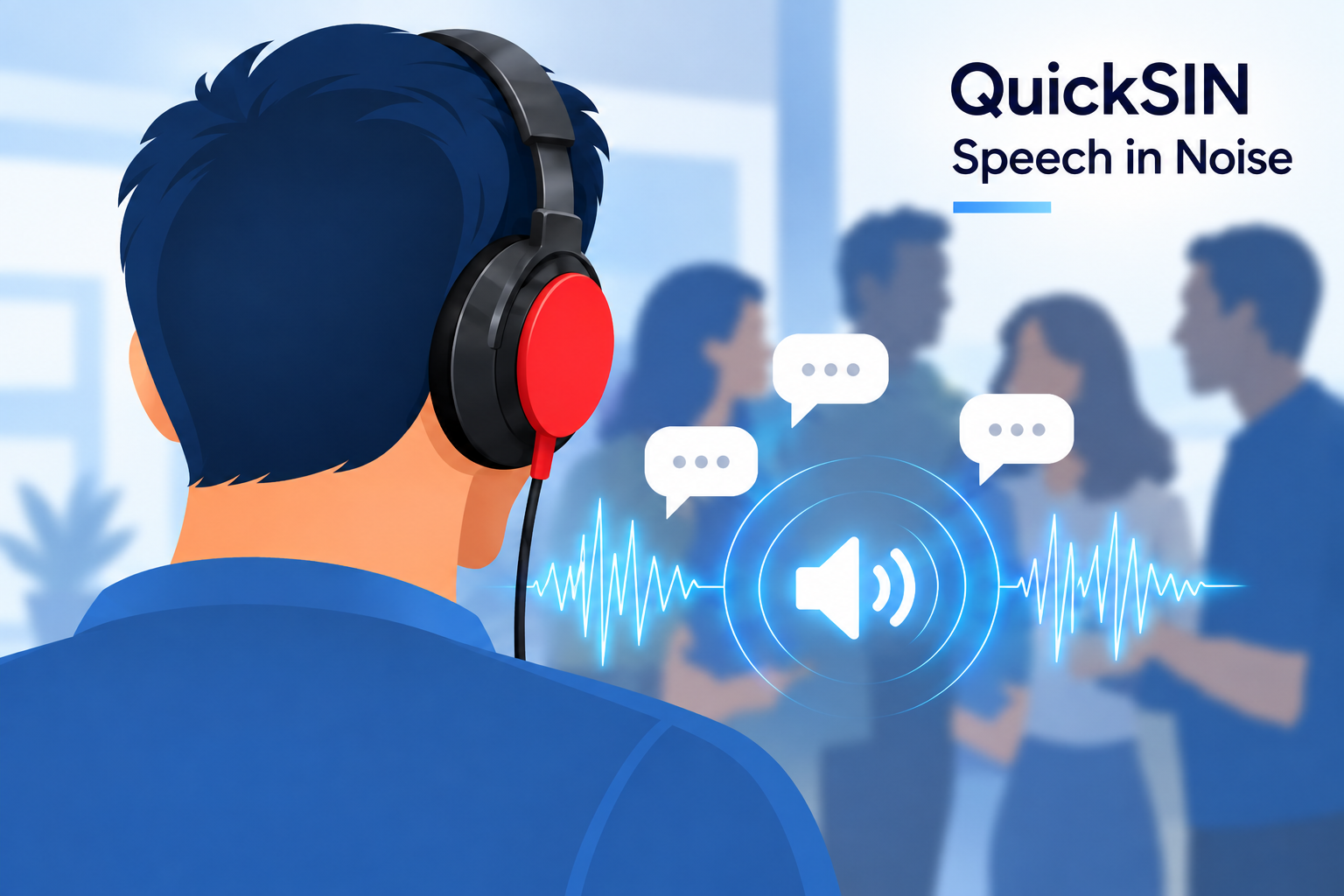
QuickSIN: Understanding Speech in Noise
Understand the conversations that are harder to follow.
What happens: You listen to sentences while other voices play in the background and repeat what you hear. The background voices become harder to ignore as the test progresses.
What we learn: Your SNR loss score estimates how much more clearly speech needs to stand out from background noise compared with someone with normal hearing. Your hearing care professional uses the result alongside your other tests to discuss listening strategies, hearing aid features, and realistic expectations.
Understanding your QuickSIN result
0 to 3 dB SNR loss - Normal or near-normal
3 to 7 dB SNR loss - Mild
7 to 15 dB SNR loss - Moderate
More than 15 dB SNR loss - Severe
A higher score means more support may be needed when listening in noise. Your hearing care professional will explain what your result means for you.[8]
My favorite sound
The ocean
What's your favorite sound? Let's help you hear it.
Schedule Your Comprehensive Hearing Test
Whether you are noticing a change in your hearing or helping someone you love, start with a comprehensive hearing evaluation. Tell us which conversations and listening situations are difficult. We will review your results and discuss your next step together.
You are welcome to bring a loved one and any existing hearing aids.