
Resources
Understanding Hearing Loss
How hearing works, what hearing changes can mean, and options for your next step.
How Hearing Works
How the Ear Works
Sound travels through the ear canal and vibrates the eardrum. Tiny middle-ear bones pass these vibrations to the inner ear, where sensory cells help turn them into electrical signals. The hearing nerve carries those signals to the brain, which recognizes the sound. [2]
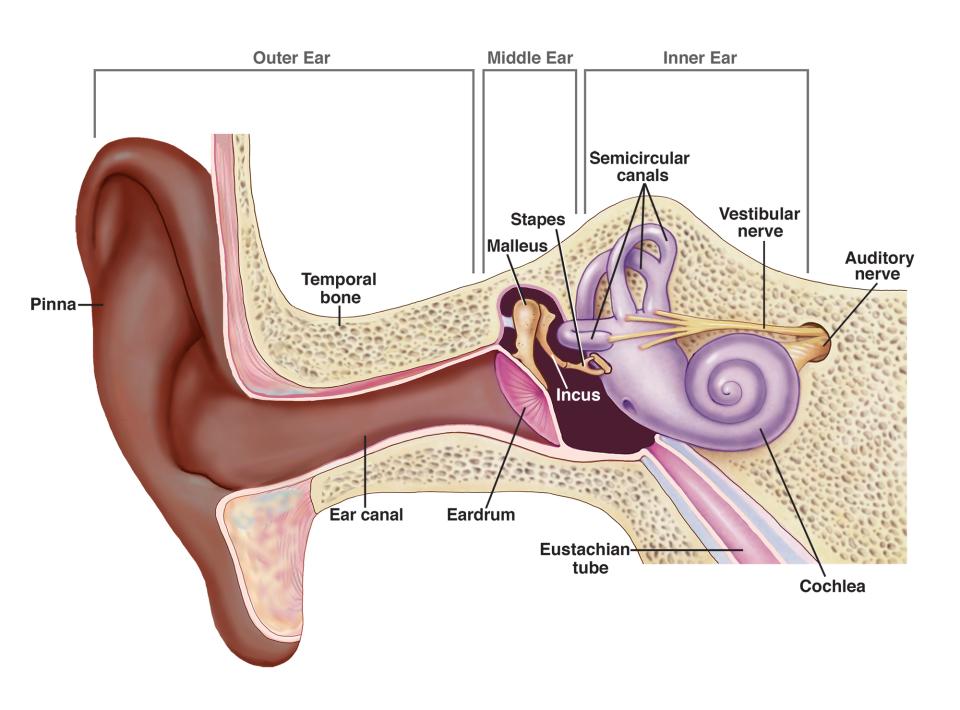
The outer, middle and inner ear work together to carry sound toward the brain. Source: NIH/NIDCD.
Watch: Journey of Sound to the Brain
This NIH/NIDCD animation follows sound from the ear to the brain.
Types of Hearing Loss
Different Types of Hearing Loss
The location and cause of a hearing change help guide your options.
Conductive Hearing Loss
Conductive hearing loss involves difficulty moving sound through the outer or middle ear. Possible causes include blocking earwax, fluid, or problems with the eardrum or middle-ear bones. Treatment depends on the cause; some conditions can improve with medical care. [3]
Sensorineural Hearing Loss
Sensorineural hearing loss involves the inner ear or hearing nerve. It is often lasting, but the cause matters: some sudden changes require urgent medical treatment. Depending on your hearing and needs, support may include hearing aids, other listening technology, communication strategies, or specialist care. [3,4,5]
Mixed hearing loss combines conductive and sensorineural components. The plan may address each component differently. [3]
Hearing and Age
Hearing Changes in Later Life
Gradual Changes
Age-related hearing changes often develop gradually and affect both ears. [1]
1 in 3
About one in three people in the U.S. aged 65 to 74 has hearing loss. [1]
Individual Options
Support depends on the cause, degree of hearing loss, and your listening needs. [1,4]
Cognitive Health
Hearing and Cognitive Health
Research has linked hearing loss with higher rates of cognitive decline, but an association does not prove that hearing loss causes dementia. [3]
The ACHIEVE trial found no overall difference in cognitive decline between hearing intervention and health education over three years. In its higher-risk heart-health-study group, hearing intervention reduced cognitive decline by 48%; this effect was not seen in the healthier volunteer group. These findings do not establish that hearing aids prevent dementia. [6]
Daily Life Impact
How Untreated Hearing Loss Affects Daily Life
Relationships
Missing parts of conversation can make time with family or friends more difficult. Tell others which listening situations are challenging. [1]
Social Activities
Background noise can make group conversations harder to follow. Facing the speaker and reducing competing sound can help. [1]
Isolation and Wellbeing
Hearing difficulties may leave some people feeling less connected. Discuss their effect on your daily life and well-being with your provider. [1]
Testing and Speech Understanding
Hearing Sounds and Understanding Speech
An audiogram shows the softest sounds you detect at different pitches. Speech tests add information about understanding spoken material. [3]
A word-recognition score is the percentage of test words repeated correctly under specified conditions. It is not a percentage of your overall hearing. Speech-in-noise testing explores understanding speech when other sounds compete. Signal-to-noise ratio describes the level of speech relative to background noise, not a percentage score. [3]
Your results are considered together with your history and everyday listening concerns. No single score explains every situation. [3]
Support Options
Finding Support That Fits Your Life
Discuss your listening goals, test results, medical needs, and available support.
Practical Considerations
Ask about handling, comfort, cleaning, follow-up support, and costs before choosing devices.
Realistic Expectations
Hearing aids can help many people communicate, but they do not restore normal hearing, and benefit varies. [4]
Your Listening Goals
Share the situations that matter to you. Your provider can discuss devices and communication strategies suited to your needs. [4]
Hearing aid styles and features vary. Choose with your needs in mind. [4]
Next Steps
Discuss Your Hearing Concerns
An evaluation can help you understand your hearing and discuss suitable next steps. Contact the practice to confirm services and appointment availability.
Sudden hearing loss is a medical emergency. Seek medical attention immediately rather than assuming it is wax or waiting for a routine appointment. [5]